The search landscape just went through its biggest shake-up since mobile-first indexing. Google's AI Overviews have fundamentally changed how brands connect with their target audiences online, and the numbers tell a story that many business leaders aren't ready to hear.
If you're still measuring your brand's SEO success purely by clicks and traffic, you're using the wrong metrics for 2026. Understanding the impact of AI Overviews on SEO has become critical for any brand that wants to maintain visibility.
The data from multiple industry studies shows something unprecedented, organic click-through rates have crashed by 61% for queries with AI Overviews present, according to Seer Interactive's analysis of over 25 million impressions.
But before you panic, let me break down what this really means for your brand's digital strategy and how your business can actually win in this new environment.
Understanding Google AI Overviews
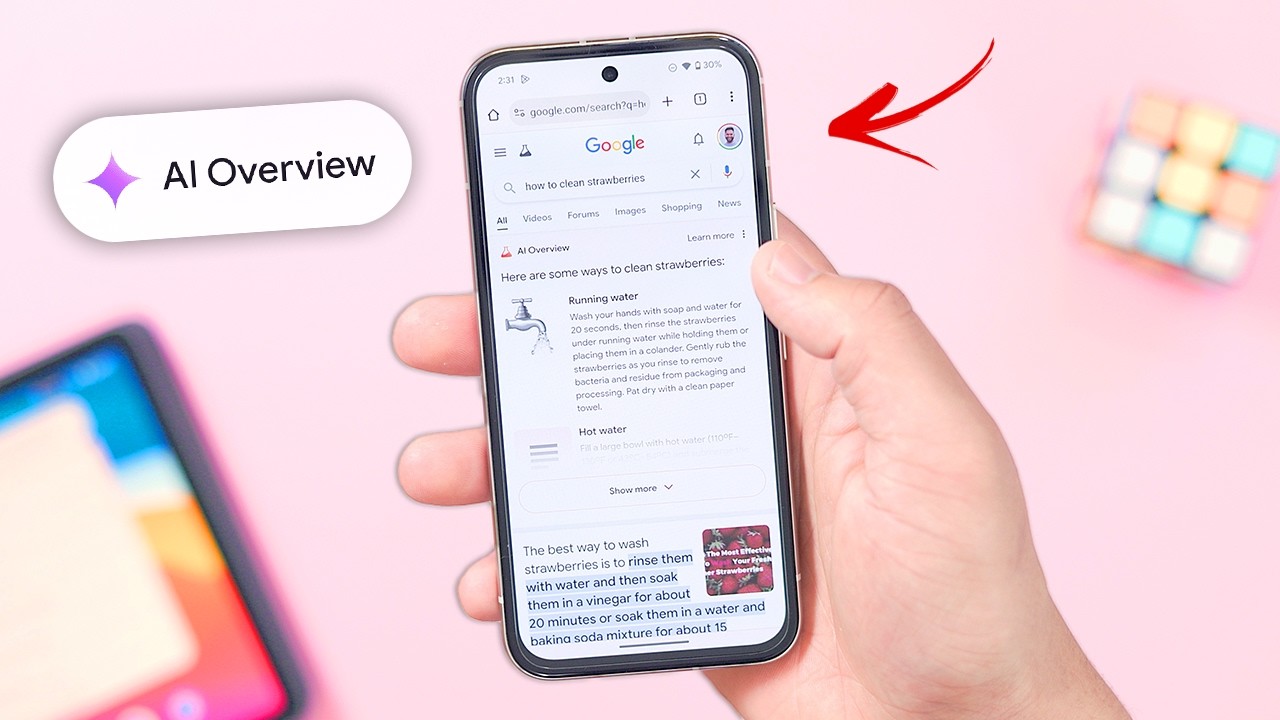
Google AI Overviews are AI-generated summaries that appear at the top of search results, synthesizing information from multiple sources to answer user queries directly. Think of it as Google reading several articles for you and presenting the highlights right on the results page.
The rollout has been aggressive. As of September 2025, AI Overviews now appear for 30% of desktop searches, a staggering 475% increase year-over-year, according to seoClarity's Research Grid data.
To fully grasp this shift, it helps to first understand What is AI Visibility and why it has become the new benchmark for brand performance in search.
What makes this different from featured snippets?
AI Overviews pull from multiple sources, dynamically generate responses using large language models, and appear for significantly more query types. While featured snippets showed one result, AI Overviews synthesize several, fundamentally changing the game.
How AI Overviews on SEO Are Crushing Organic CTR
Let's get into the hard data.
When examining the impact of AI Overviews on SEO performance, multiple independent studies have confirmed what many SEOs suspected but hoped wasn't true.
When AI Overviews appear on the SERP:
- Organic CTR dropped from 1.76% to 0.61% (a 61% decline) for informational queries
- Paid CTR plummeted from 19.7% to 6.34% (a 68% drop)
- Position #1 rankings saw a 34.5% lower CTR compared to searches without AI Overviews
These numbers come from Seer Interactive's comprehensive study analyzing 3,119 informational queries across 42 organizations between June 2024 and September 2025.
But here's where it gets interesting. Even queries without AI Overviews are experiencing CTR declines of 41% year-over-year. This suggests a broader behavioral shift, users are clicking less everywhere, likely due to the rise of ChatGPT, Perplexity, and social search platforms.
What this really means is that the total available clicks haven't disappeared entirely. Search volume on Google actually grew 21.6% from 2023 to 2024, processing an estimated 14 billion searches daily.
The paradox? More searches happening, but fewer clicks per search.
The Citation Advantage
Now for the good news. If your brand gets cited in an AI Overview, the data tells a completely different story:
- 35% higher organic CTR when your brand is cited versus not cited
- 91% higher paid CTR when your brand appears in AI Overviews
- Brands appearing in AI Overviews position themselves as trusted industry authorities and thought leaders
According to research from Writesonic, if your brand's website ranks first in traditional SERP results, you have a 33% chance of also appearing in AI Overviews. The correlation is clear, strong traditional SEO performance feeds AI Overview visibility.
This is why smart brand marketers are shifting their KPIs from pure traffic metrics to brand visibility, share of voice, and citation frequency across AI platforms. One AI citation can generate more qualified traffic for your brand than ranking #3 for the same query in traditional results.
However, none of this is possible without understanding how search behavior is evolving. Modern keyword research in 2026 requires identifying conversational, AI-generated, and intent-driven queries rather than focusing solely on traditional search volume metrics.
How AI Overviews Work and Why It Matters for SEO
Google's AI Overviews use the company's Gemini technology to analyze web pages through sophisticated AI search algorithms. Understanding this mechanism is essential for grasping the full impact of AI Overviews on SEO strategies.
When a user searches, the system performs what Google calls "query fan-out", breaking a single query into multiple related sub-queries.
Research from Ahrefs shows near-zero correlation (Spearman ~0.04) between content length and AI citations. Dan Petrovic's study on Google's "grounding" (the source material used for AI Overviews) found that grounding plateaus at around 540 words, and pages over 2,000 words see diminishing returns.
What matters instead? Density over length. Your content needs to be the most relevant source for a query, not necessarily the longest.
Currently, 88.1% of queries triggering AI Overviews are informational, and 58% of all informational search queries now trigger AI Overviews as the top result, according to Ahrefs data.
This has massive implications for content marketers who've built strategies around informational content.
The Industries and Brands Hit Hardest
Not all brands and sectors are experiencing the same impact. The impact of AI Overviews on SEO varies significantly by industry vertical. Here's what the data shows:
Brand Categories Most Affected:
- Financial services brands: 26.6% of searches trigger AI Overviews
- Healthcare brands: High information-seeking queries frequently trigger AI responses
- B2B service brands: Approximately 70% of B2B searches now have AI answers
Brand Categories Showing Resilience:
- E-commerce brands with strong product differentiation (especially branded searches)
- Local business brands requiring current information
- Direct-to-consumer brands with transactional queries (though these saw a 9.5% CTR decline versus 33% for informational)
Branded keywords are particularly interesting for brand marketing teams. They're less likely to trigger AI Overviews (only 4.79% of the time), but when they do, brands get an 18.68% CTR boost, according to Amsive's analysis of 700,000 keywords.
This means your brand name searches remain relatively protected while generic category searches face heavier AI Overview competition.
How to Rank in AI Overviews and Recover SEO Visibility
After analyzing successful brand cases, here's what the research shows about getting your brand cited:
1. Answer Intent Immediately with Brand Authority AI models prioritize content that directly addresses user intent from credible sources. Start every brand article with a 50-70 word summary that answers the primary query while subtly establishing your brand expertise. This makes it easy for AI to extract and cite your brand's answer.
2. Build Brand-Specific Topical Authority Research from SE Ranking shows that pages using 120-180 words between headings receive 70% more ChatGPT citations than pages with sections under 50 words. Brands covering multiple aspects of a topic perform better in fan-out query SERPs. Create content clusters around your brand's core expertise areas.
3. Keep Brand Content Fresh and Updated Content updated in the past three months averages 6 citations versus 3.6 for outdated pages. Recency matters more than ever in AI search. Brands that consistently update their thought leadership content maintain higher AI visibility.
4. Structure Content for Semantic Brand Understanding Use question-based headings and FAQ sections. Articles over 2,900 words average 5.1 citations, while those under 800 get 3.2. However, for smaller brands and domains, content length has roughly 65% more impact on ChatGPT citations than for established enterprise brands.
5. Demonstrate Brand E-E-A-T Signals Google's AI favors pages written by brand experts and thought leaders who understand the topic with first-hand experience. If Google doesn't surface your brand's content in traditional search, AI Overviews likely won't either. Author bylines, credentials, and brand authority matter significantly.
6. Use Schema Markup to Enhance Brand Visibility 82% of Google AI Overview citations come from deep pages, not just homepage content, according to Search Engine Land research. Proper Organization and Brand schema markup helps AI understand your brand structure and expertise areas.
The Brand Traffic Paradox: Quality Over Quantity
Here's what brand marketers are missing, while total clicks may be down, the quality of AI-driven traffic to your brand is actually higher. Google's own data shows that clicks from AI Overview results have higher engagement, with users spending more time on brand websites.
Early research indicates that AI referral traffic converts better than traditional search visitors for brands, though some recent studies dispute this. What's clear is that users who click through to your brand after reading an AI Overview arrive more informed and with higher intent, they've already been pre-qualified by the AI summary.
AI traffic to brand websites has grown 9.7% since 2024, and generative AI traffic is growing 165 times faster than organic search traffic, according to WebFX data. ChatGPT now sends more referral traffic than Reddit and LinkedIn combined to brand websites.
For brands, this means shifting focus from vanity traffic metrics to engagement quality. A brand that gets 1,000 AI-referred visitors converting at 5% is far better off than 10,000 traditional search visitors converting at 0.3%.
Frequently Asked Questions: Impact of AI Overviews on SEO
Q: How do AI Overviews affect my website's SEO rankings?
AI Overviews don't directly lower your rankings, but they reduce organic CTR significantly — by up to 61% for informational queries. Your position may stay the same while traffic drops.
Q: What is the role of brand authority in AI search results?
Brand authority is now the #1 factor for AI Overview citations. Google's Gemini favors content from established, credible sources with strong E-E-A-T signals. Brands with topical authority get cited more frequently, which drives higher-quality referral traffic.
Q: How do niche competitors dominating AI answers in subtopics affect my brand?
If a competitor gets cited for subtopics within your niche, they effectively own that portion of the search journey. This erodes your share of voice even if your main keyword rankings remain stable. Building content clusters across all subtopics is the defence.
Q: Can I recover SEO traffic lost to AI Overviews?
Yes — by optimising to appear inside AI Overviews rather than competing against them. Brands cited in AI Overviews see 35% higher CTR than those not cited.
Q: Does AI Overview visibility affect paid search performance too?
Yes. Paid CTR drops 68% when AI Overviews are present. Both organic and paid strategies need to account for this shift.
Conclusion: Your Brand Can't Afford to Wait
AI Overviews now reach 1.5 billion users monthly across 200+ countries. Google announced at I/O 2025 that AI Mode represents the future of search. The company is aggressively expanding this feature because it sees conversational search as where brand discovery is heading.
The 61% CTR decline for organic search isn't temporary, it represents fundamental behavioral change in how consumers discover and evaluate brands. The impact of AI Overviews on SEO is permanent, reshaping the entire digital marketing landscape.
But it's not all doom and gloom for forward-thinking brands. The total pool of available clicks has actually expanded because search volume growth outpaces zero-click growth.
According to Conductor's 2025 State of SEO Survey, 91% of respondents reported that SEO positively impacted website performance and marketing goals in 2024, even with AI Overviews present. Brands aren't dying, they're evolving.
The winning brands in this new landscape will be those who adapt quickly, focus on becoming authoritative cited sources, and understand that brand visibility and thought leadership matter more than raw traffic numbers.
Companies implementing AI-focused strategies in their brand marketing have seen search engine rankings improve by 30% within six months, according to data compiled by SEOmator.
Here's our take, treat AI Overview brand visibility as a core KPI right now. Don't wait for the competitive landscape to stabilize. The brands that master AI Overview optimization today, the ones building topical authority, earning citations, and establishing themselves as go-to sources, will dominate their industries tomorrow.