Search has changed. Ranking on page one is still important, but in many searches, users now see AI-generated summaries before traditional organic results. These AI Overviews. often answer the query directly and shape which websites get noticed first.
Table of Content
If your content is not being cited in these summaries, you may be missing visibility even when your rankings look strong. For many businesses, this means SEO is no longer only about earning clicks. It is also about becoming a trusted source that search engines reference.
People are increasingly getting quick answers without scrolling through multiple links. That shift makes content clarity, credibility, and structure more important than ever.
To stay competitive, your website needs to do more than rank. It needs to provide useful, well-structured information that search engines can confidently surface in AI-driven results.
What is AI Overviews?
AI Overviews represent a shift from “search engine” to “answer engine.” When a user submits a query, the system evaluates the top-tier content across the internet and generates a cohesive, easy-to-read summary. This summary appears before the traditional organic listings, providing users with an immediate solution to their problem.
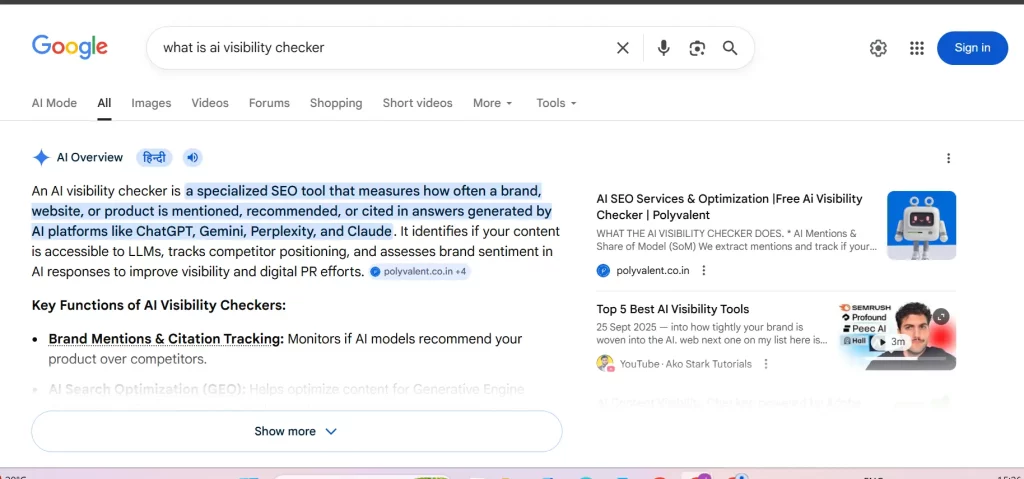
For business owners, these summaries are critical because they capture the “Position Zero” spot. They offer a unique blend of high visibility and instant credibility. When your website is cited within an overview, you are not just a search result; you are a verified expert.
When AI Overviews Appears
These generated summaries do not appear for every single search. They are specifically designed for moments when a user needs more than a simple fact but less than a full research paper. You will most commonly see them in the following scenarios:
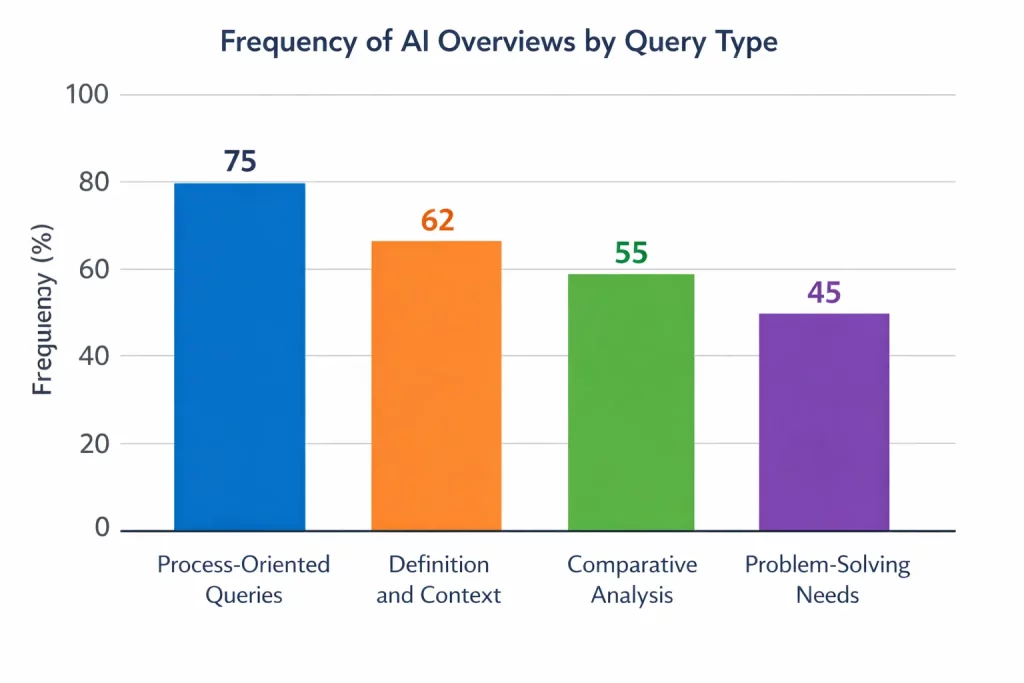
- Process-Oriented Queries: Any search that involves “how to” or “steps to” usually triggers a summary to break down the stages of a task.
- Definition and Context: When a user asks for an explanation of a complex concept or a recent trend.
- Comparative Analysis: Searches that ask to compare two products, services, or strategies.
- Problem-Solving Needs: When a user describes a symptom or an issue and looks for potential causes or fixes.
How AI Overviews is Important for Business and Websites
The impact of these summaries on your digital performance cannot be overstated. They influence every stage of the marketing funnel.
Building Trust Through Citations
When a search engine picks your content to power its summary, it serves as a high-level endorsement. Users are more likely to trust a brand that is featured as a foundational source for an answer.
Driving Qualified Traffic
While the summary provides an answer, it also leaves the user wanting more detail. The clicks that come from these summaries are often from users who are deeper in the research phase and are more likely to engage with your site’s specific offerings.
Staying Ahead of the Competition
As more companies compete for a limited number of spots, those who optimize early for these overviews will secure a long-term advantage in brand recognition and organic reach.
How AI Overviews Work
The logic behind these summaries is based on relevance and clarity. The system does not just look for keywords; it looks for “entities” and “intent.”
- Parsing the Query: One of the most critical components of this process is a concept known as Query Fan Out. When a user enters a complex or multifaceted question, the search system does not look for just one answer. Instead, it “fans out” the original query into several related sub-queries. For example, if a user asks “How do I transition my business to a remote model,” the system might generate sub-queries about remote communication tools, legal requirements for home offices, and employee engagement strategies. By gathering data from many different sources simultaneously, the engine can build a comprehensive summary that covers every angle of the user’s intent.
- Source Evaluation: It scans indexed pages that have high authority and clear structures.
- Information Extraction: It pulls out specific sentences or data points that directly address the user’s intent.
- Generative Synthesis: It rewrites that information into a natural, conversational format, providing links back to the original creators.
7 Strategies to optimize for AI Overviews
Achieving visibility in these summaries requires a mix of technical precision and high-quality writing. Here are seven ways to prepare your site.
1. Make Content Scannable
Search engines need to be able to “read” your page in milliseconds. Use a clear hierarchy with H2 and H3 tags. Use bullet points for lists and keep your paragraphs short. The easier it is for a machine to parse your page, the easier it is for that machine to summarize it.
2. Keep Content Fresh and Updated
An outdated page is an untrustworthy page. Ensure your content reflects the most current data, dates, and industry standards. Regularly refreshing your high-traffic posts signals to search engines that your information is still the most accurate choice for an overview.
3. Ensure Pages are Indexed or Indexable
Your technical foundation must be solid. Use your search console to ensure there are no crawl errors. If a search engine cannot access your page or if your site architecture is a maze, your content will never be considered for a summary, regardless of how good the writing is.
4. Perform Keyword Research and Use Long-Tail Keywords
Focus on “conversational” keywords. Think about how a person would ask a question out loud. Instead of targeting “SEO tips,” target “What are the most effective ways to improve search visibility in 2026?” This aligns your content with the natural language patterns that trigger overviews.
5. Improve Website Speed and Pass Core Web Vitals
Performance is a ranking factor that carries over into the world of summaries. A fast-loading site with a stable visual layout provides a better user experience. Engines prefer to cite sources that won’t frustrate the user once they click the link.
6. Follow Technical SEO and On-Page SEO Best Practices
Using structured data (Schema markup) is non-negotiable. This hidden code tells the search engine exactly what your content represents whether it is a recipe, a review, or a FAQ. For a complete list of technical requirements, refer to this GEO Checklist to ensure you aren’t missing any critical steps.
Alongside schema, optimizing internal linking helps search engines better understand your content hierarchy, topical authority, and page relationships, making it easier for both traditional search and AI systems to surface your most valuable pages.
7. Build Quality Backlinks and Brand Mentions
Authority is still the currency of the web. Focus on earning links from reputable industry publications and news sites. Furthermore, ensure your brand is mentioned across social platforms and forums, as search engines use these broad signals to determine your overall influence.
How to Check Your Website is Appearing in AI Overviews
Monitoring your presence in these summaries is different from checking your standard rankings. Because these overviews can be personalized or location-dependent, you need specialized tools to get an accurate picture. Using an AI Visibility Checker allows you to see where your brand is being cited and where you are losing ground to competitors. Regular audits will help you identify which content pieces are performing well and which ones need a rewrite to be more “summarizable.”
Suggested Backlink Strategy for 2026
To improve your chances of being featured, focus on these specific types of backlinks:
- Niche-Specific Directories: Be listed where your industry lives.
- Educational (.edu) Citations: Provide research or data that schools and universities find valuable.
- Guest Contributions: Write for high-authority blogs in your sector to prove your thought leadership.
- Podcast and Webinar Mentions: Digital footprints from audio and video content add to your brand’s perceived authority.
FAQs
Will AI Overviews take away all my organic traffic?
No. AI Overviews may reduce clicks for simple informational searches, but they can still drive traffic for users who want deeper explanations, comparisons, or services. If your content is cited, you can still attract highly qualified visitors.
How does Query Fan Out help my website?
Query Fan Out expands one broad search into multiple related questions. If your content clearly answers one of those related questions better than others, your page has a stronger chance of being included as a source.
How do I know if my content is “summarizable”?
Your content is easier to summarize when it answers a specific question quickly, uses clear headings, and avoids unnecessary filler. Strong introductions, direct explanations, and structured sections make it easier for search engines to extract useful information.
Is long-form content still relevant?
Yes. Detailed content often gives search engines more context, supporting facts, and topical depth. The key is structure. Long-form content works best when it is easy to scan and clearly organized.
Do I need to use specific tools to rank in these summaries?
No. Tools can help you monitor visibility, but ranking is more influenced by content quality, technical SEO, page structure, and authority. Useful tools support strategy, but they do not replace strong execution.
Does mobile optimization affect AI Overviews?
Yes. Mobile-friendly pages load faster, are easier to use, and provide a better experience after the click. Slow or poorly optimized mobile pages may reduce your chances of staying competitive.
How often should I update my old blog posts?
Review important pages every 3 to 6 months. Update outdated statistics, improve weak sections, refresh examples, and check whether the content still matches current search behavior. Regular updates help maintain relevance.